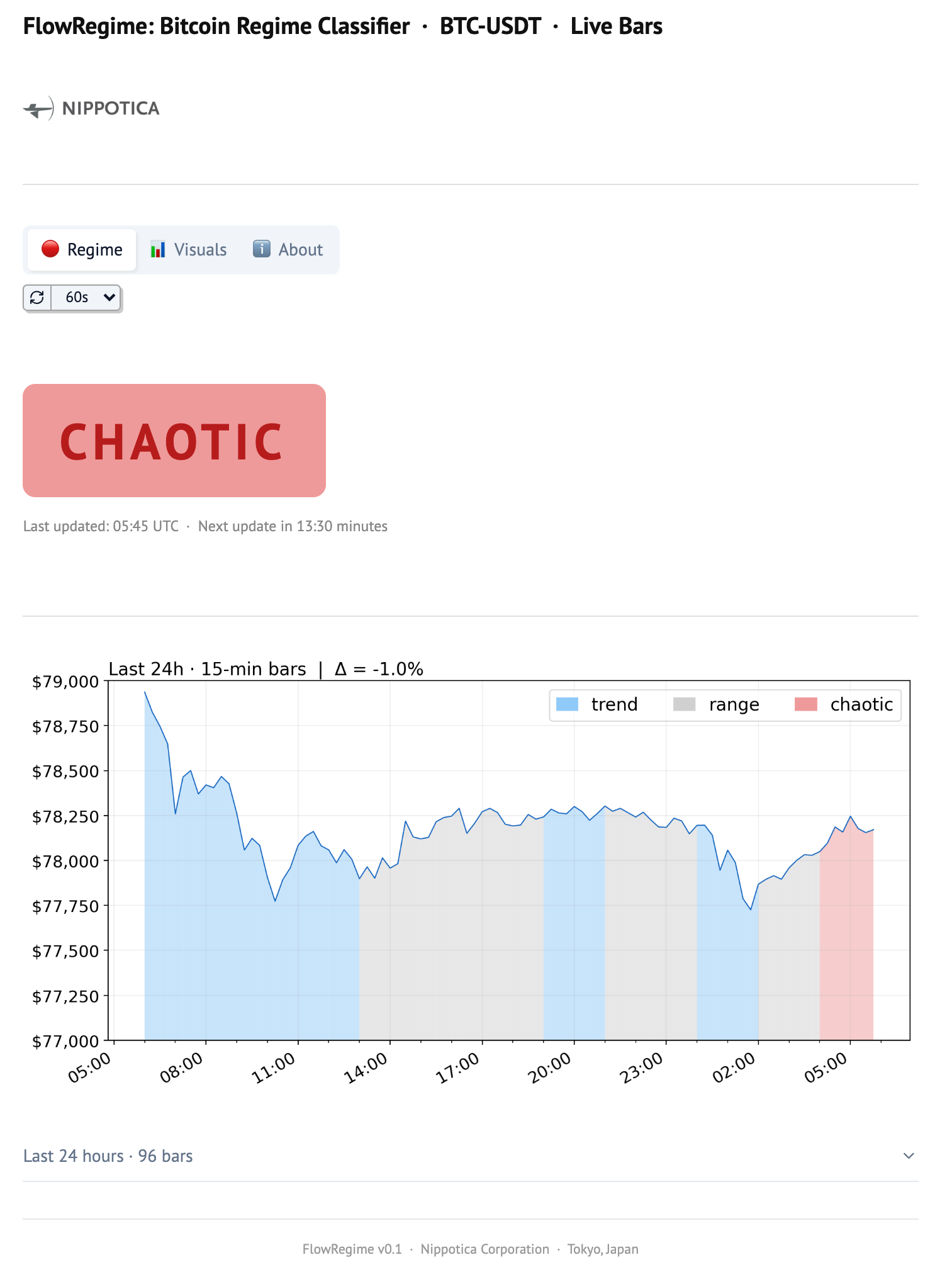
This study explores the identification and assessment of regime shifts in Bitcoin markets through the application of advanced statistical models, namely HMMs, MSMs, and Threshold Models. The analysis utilizes key financial indicators including market capitalization, volatility, trading volume, and historical Bitcoin price data, along with statistical measures such as mean, minimum, and maximum values to enhance the detection of market patterns. Distinctions are made between bullish (sustained price increases exceeding 20%), bearish (sustained price declines exceeding 20%), and neutral (periods of low volatility and sideways movement) market regimes. HMMs provide predictive insights into market transitions, MSMs are employed to capture structural regime changes, and the Threshold Model identifies significant price behaviors.
2023
Wiley
Deep order flow imbalance: Extracting alpha at multiple horizons from the limit order book
Petter N Kolm, Jeremy Turiel, and Nicholas Westray
We employ deep learning in forecasting high‐frequency returns at multiple horizons for 115 stocks traded on Nasdaq using order book information at the most granular level. While raw order book states can be used as input to the forecasting models, we achieve state‐of‐the‐art predictive accuracy by training simpler “off‐the‐shelf” artificial neural networks on stationary inputs derived from the order book. Specifically, models trained on order flow significantly outperform most models trained directly on order books. Using cross‐sectional regressions, we link the forecasting performance of a long short‐term memory network to stock characteristics at the market microstructure level, suggesting that “information‐rich” stocks can be predicted more accurately. Finally, we demonstrate that the effective horizon of stock specific forecasts is approximately two average price changes.